The Phat Samurai Guy 2019 Movie Reviews Youtube
In Japanese cinema, frequently ane comes across films that are incredibly difficult to categorize. Are they science fiction? Horror? One-act? All of the higher up? A lot of the fourth dimension, when one encounters this fascinating area of Japanese cult films, the reply is yeah. For the amateur cinephile and aficionado alike, it is exactly that difficult-to-pin-down, out-of-the-ordinary quality that drew them to Asian cinema in the first place.
Unusual characters, risqué imagery and storylines, ambitious production goals and flat-out weirdness are what nearly often delineate this daring flick genre from conventional mainstream fare, granting many of the titles on this list the status of confirmed classics of the baroque and extraordinary, while others are well on their way to beingness the cult classics of the future.
You'll encounter here movies that are generally filed nether "fine art films", some that were meant every bit mindless, shallow entertainment, others that perfectly correspond a particular period in the history of Japanese filmmaking, and still others that, in keeping with the theme of the article, don't seem to fit any definition of what a moving-picture show is "supposed" to be.
xv. Daimajin
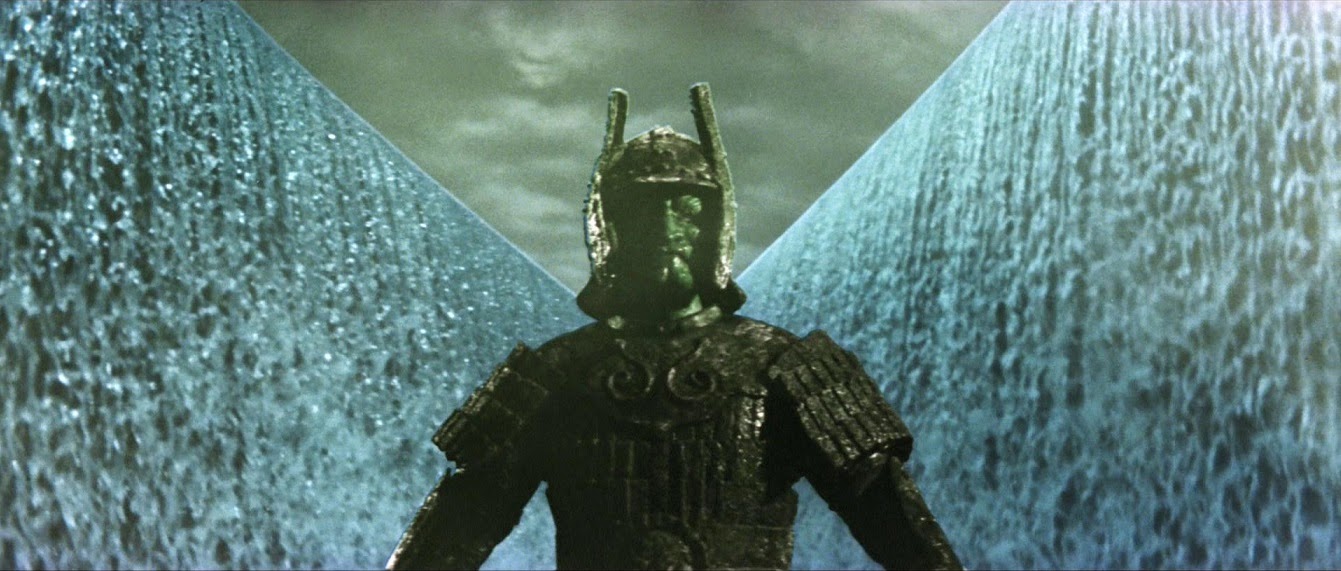
Non as popular as the kaiju output of Toho Studios (or even fellow monster series Gamera from the same studios of the Daiei Movement Picture Company), Daimajin represents and intersection of the samurai, kaiju, and supernatural horror genres that had never earlier been attempted, and has never since returned to frighten villages of awestruck farmers and bring terrible wrath on the heads of heartless, decadent officials.
After the untimely death of a local feudal lord, a scheming chamberlain takes over, forcing all of the men of a farming village into slavery. He persecutes the former lord's surviving children when he learns of their existence and tries to destroy the statue of the deity Daimajin that rests one-half-buried in the side of a mount.
Desperate, the lord'south daughter offers up her life in substitution for the deity's help, bringing the statue to life, its confront a frightful mask of samurai rage. Daimajin descends on the evil chamberlain and his men, killing them and virtually slap-up the village earlier the young woman again intercedes.
The offset installment of a trilogy (all three films follow the same basic formula), Daimajin is in many respects one of the best-looking, and sadly also i of the least well-known, kaiju films of the Sixties. Gorgeously shot and expertly crafted, it pushes the boundaries of miniature and photographic effects of the fourth dimension, executing what are, hands down, among the most convincingly realistic and emotionally cathartic giant monster rampages in movie history.
As dramatically stiff equally it is cute to wait at, Daimajin needs to be seen past every cult movie fanatic in search of the refreshingly unique. Thundering music Akira Ifukube, the same man who scored Godzilla's first foray into Tokyo.
14. War of the Gargantuas
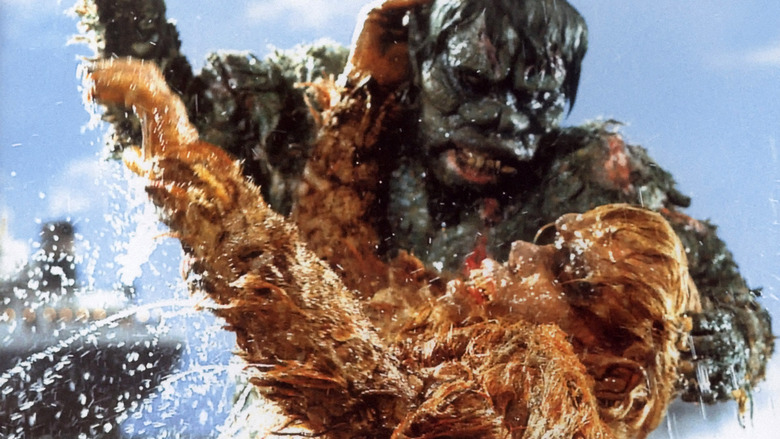
When a trawler is attacked by a behemothic octopus, a massive creature rises out of the ocean to fight it, sinking the send in the process. He continues binge with an assail on an airport—during which he eats a woman alive—and another on the city of Tokyo. He turns out to exist a hairy humaniod chosen Gaira, similar in appearance to another creature studied by a inquiry squad some years earlier.
The scientists involved are convinced Gaira can't exist their fauna, who was non-tearing. When the military corners Gaira and comes close to killing him with laser cannons, the other, bigger fauna, called Sanda, appears and whisks him away. It becomes clear to the scientists that the two monsters were born from the same mutated cells. After Sanda realizes that his brother is beyond redemption, they engage in a battle that takes them to the sea, where they are both swallowed upwardly by a all of a sudden agile undersea volcano.
Fabricated as a co-production between Toho Studios and the American film company UPA, War of the Gargantuas is a sequel to Frankenstein Vs. Baragon, known in usa as Frankenstein Conquers The World. The creatures are even called "Frankensteins" in the original language track, but are changed to "Gargantuas" for any version dubbed or subtitled in English.
The idea is that both monsters grew from cells collected from the severed hand of the colossal Frankenstein's Monster from the first motion-picture show, though it's certainly non necessary to have seen that i to savor State of war of the Gargantuas—in fact, footling effort is fabricated in the English versions to make a connexion with the previous moving-picture show.
Directed past famed kaiju-master Ishiro Honda, Gargantuas has the sharp, highly detailed look of his other monster films from the Sixties and Seventies, perfectly capturing Eiji Tsuburaya's incredible miniature work and monster costumes, which are fabricated all the more amazing past the fact that they permit the audience to encounter the actor's optics, lending the story a greater sense of drama.
As in other American co-productions with Toho, an American actor appears along with the Japanese cast—Russ Tamblyn in this case, taking over from Nick Adams in the first film (Adams besides appeared in Honda'southward Invasion of Astro-Monster). Generally regarded as one of the finest and almost original kaiju films, jam-packed with groovy activeness and stunning imagery.
13. Versus
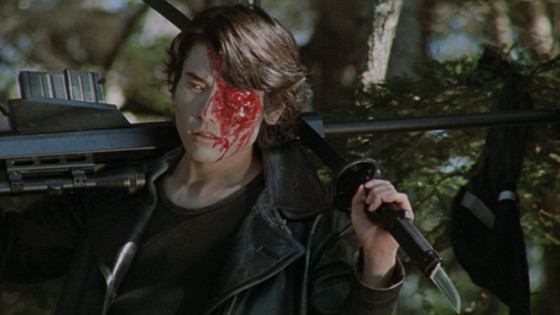
A group of yakuza and an escaped prisoner come across each other outside a woods that reputedly contains a portal to another dimension. The prisoner rescues a girl from their clutches and takes off into the forest with her, followed past the gang. One within, they engage in combat with the reanimated corpses of the gang's cached rivals, and the prisoner finds himself in a one-man state of war confronting supernaturally-powered assassins. Realizing he is part of an historic conflict that has been going on for centuries, the prisoner attempts to keep the gang's leader from opening the portal, using a combination of guns, swords, and his blank hands.
The get-go characteristic-length motion picture from Ryuhei Kitamura (who would go on to direct, amid other films, the last Japanese-produced Godzilla moving-picture show, Godzilla: Final Wars), Versus is 1 of a handful of success stories where an independent filmmaker goes all-in on a depression-upkeep project and has it pay off in a major fashion. Legend has it that Kitamura thought this was the merely full-length film he'd e'er get to make, and so he threw everything he loved about his favorite genre films into a blender and ended upwards with this dizzying puree comprised of yakuza films, zombies, John Woo, The Evil Expressionless, samurai films, and kung fu.
The movie seems calculated to escalate with each scene, building from casual gangster absurd to bloody zombie shootouts and eventually exploding into tightly choreographed, wickedly performed knife-fighting and swordplay. The story even moves backward and forwards in time, flashing dorsum to the death of a samurai and into a future of deadly wastelands populated by Road Warrior cyberpunks, at which point Versus unveils a story-inverting twist catastrophe that caps off the best low-budget indie project since the early on piece of work of Sam Raimi and George Romero.
12. Princess Mononoke
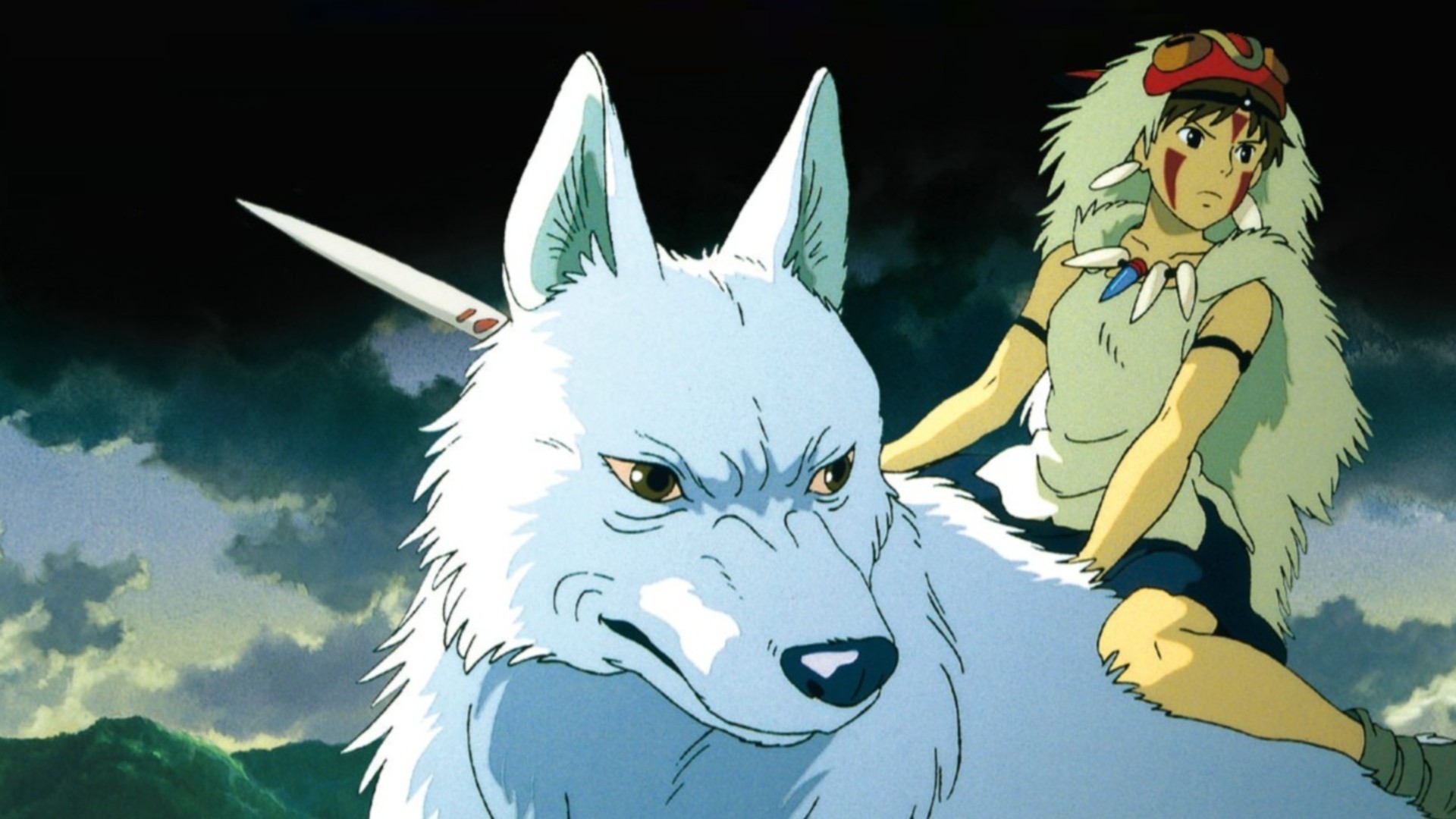
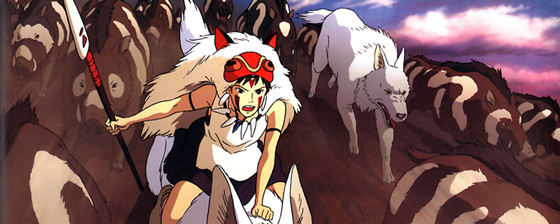
Hayao Miyazaki, along with Akira managing director Katsuhiro Otomo and Ghost In The Shell helmer Mamoru Oshii, is one of the filmmakers well-nigh responsible for pushing anime out of the ghetto of geek subculture and into the arena of international respectability afforded to "real" cinema.
His work states equally firmly as whatever other that Japanese animation is equally viable and as worthy of inclusion in the classical canon as the best work of Disney Studios. He accomplished this feat past telling stories that strike an almost elemental note of myth and enchantment, assembling out of the standard parts and pieces of mainstream anime visuals that one feels have never been seen before, a quality of experience that may never be replicated again.
The bulletin of Miyazaki's masterpiece is unmistakable: rampant human consumption of nature will eventually lead to death and destruction, and well equally the despoilment of all that is cute in the world. Set in medieval Nihon, the story follows Ashitaka, the prince of a primitive tribe who becomes infected past a unsafe substance that has overtaken the body of a boar god, turning it into a grotesque demon. He seeks out the domain of the Wood God, where he might find a cure for his affliction.
In doing so, he comes beyond Irontown, an establishment run by a woman named Lady Eboshi who is determined to do away with all of the gods of the wood so she can use its resource without interference. With the assistance of a young girl raised by wolves (the Princess Mononoke of the championship), the prince tries to put a stop to Eboshi's plan to kill the Wood God and wage a war of genocide against the rest of the forest spirits. When the god is decapitated, the human action unleashes a destructive force that threatens to annihilate the entire globe.
Miyazaki'southward parable is a detailed counterpart of the modern globe. Irontown employs former prostitutes and the diseased to assemble weapons for the state of war, suggesting the fashion in which industry often employs the drastic to further its production goals. Irontown itself symbolizes the worst aspects of human culture, setting itself against the natural world to non just its own detriment only that of any living matter that gets in its manner.
Toward the end, the human appetite to control nature through violence results in a ending, a story element that tin be applied to contemporary dangers such as climate change, meltdowns at nuclear power plants or possible earthquakes acquired past hydraulic fracturing—any of them fit the theme of this visually scenic, i-of-a-kind film that tin can simply not exist praised enough.
11. Yokai Monsters: Spook Warfare
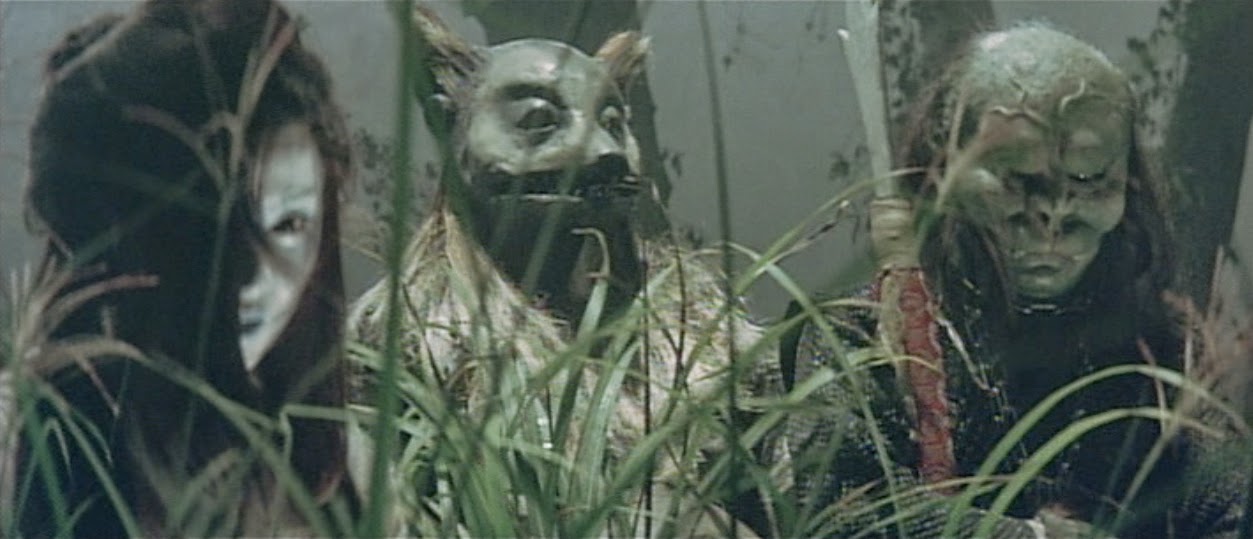
As 2 grave robbers raid a tomb in the ruins of ancient Babylon, they awaken a powerful demon called Daimon, who flies to Japan to wreak havoc. Once there, he drinks the claret of a samurai magistrate and ane of his underlings, possessing their bodies and demanding that the household shrines be destroyed. Daimon'south activities are noticed by a kappa living in the pond outside the business firm, who tries to fight the demon to no avail. His yokai friends provide little help, non believing his tale of a strange monster they've never heard of.
However, as the possessed magistrate sends his retainer out to bring him children from nearby farms so he can subsist on their blood, two escaped youngsters implore the yokai to assistance. After several unsuccessful attempts to beat out the evil Daimon, they call on all the yokai of Japan to declare war on the interloper, fearing the reputation of Japanese supernatural beings will be forever tarnished if they can't send him packing.
Part of a trilogy of films produced by Daiei Motility Motion picture Visitor from 1968 to 1969, Yokai Monsters: Spook Warfare is an almost perfect kids' film, provided parents tin overlook infrequent—and fairly minimal—mortality and mild blasphemous (the other condition would exist kids that are good at reading subtitles or speak fluent Japanese).
The movie is fast-paced, fun and colorful, making apply of dazzling—and, for the fourth dimension, quite sophisticated—special effects, giving it the aforementioned level of production value found in the studio'southward other fantasy trilogy of Daimajin films, and the kid-friendly feel of their Gamera serial. Also a lot of fun for adults keen to learn something near Eastern folklore.
10. Vampire Hunter D
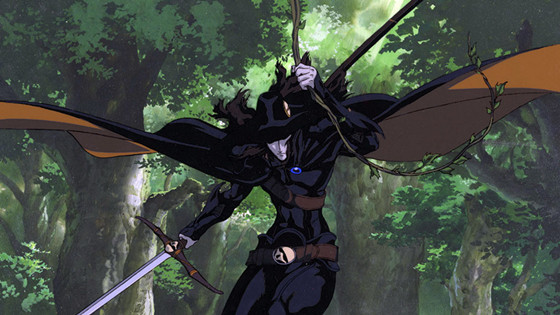
Out of the wild and woolly world of the 1980s comes this inspired practice in blithe sci-fi/horror. No CGI enhancement, no giant robots, merely a harsh, fantastical dystopia of undead overlords and sinister demons. The vampire hunter named D, a direct descendant of Count Dracula, takes on a 10,000-year-erstwhile vampire who holds an unabridged region in his terrifying grip. Helping him fight the ancient bloodsucker and his minions are a scimitar-like longsword and the face on the palm of his manus that dispenses (often unwanted) communication and criticism and well every bit giving D an extra border in healing from injuries.
Vampire Hunter D takes place very smartly not in a loftier-tech futuristic lodge but rather in a far-flung time that bears all the trappings of 19th-century Europe while also including science fiction elements such as laser rifles—a kind of steampunk by default, if you will. Like all great anime, it creates a globe that is unique in its depiction of fourth dimension and identify, intermingling horror, science fiction, period drama, and fantasy, tailor-made for those who relish supernatural fiction with a affect of inventiveness and class. Based on a series of novels by Hideyuki Kikuchi.
9. Kibakichi
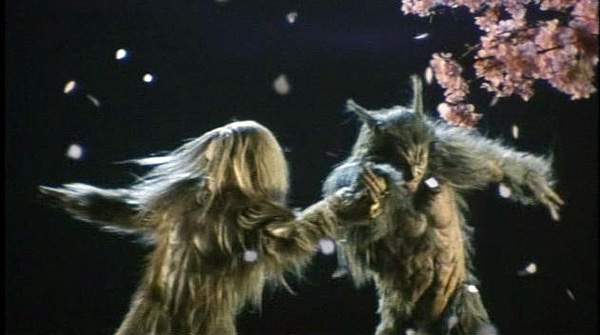
A ragged samurai named Kibakichi walks a lonely country road and finds himself confronted past sword-wielding ruffians. What follows is a fight that leads to cleanly severed limbs and high-pressure bloodspray. The warrior pushes on, coming to a village where the master business organisation appears to be a gambling house run by yokai (Japanese demons from ancient folklore).
The yokai have made bargain with a nearby feudal lord—they kill and eat criminals who finish in their village to gamble in exchange for peace. But Kibakichi knows better. His own hamlet, populated past werewolves such as himself, was wiped out by humans who had promised to leave them alone. Equally the supernatural beings debate, the feudal lord's henchman larn guns and explosives from a Western power and plan to utilize them to wipe out the yokai for good.
If you take a bit of Lone Wolf and Cub, throw in a lilliputian of Joe Dante'south The Howling, and stir in some of the visual sensibility of Lucio Fulci, you'll have something that strongly resembles Kibakichi, a sort of period horror anime presented in live action. After a strong kickoff, it gets kind of dull in the second act, but stick with information technology: this is a picture that seems to have been made with the finale chiefly in mind.
The graphic symbol Kibakichi transforms into a werewolf to fight the gun-toting samurai clan, leaping and flipping, dodging exploding grenades, going one-on-one with a yokai cyclops, and employing wolfman hand-to-hand combat. If the unabridged movie were like its last fifteen minutes, it would exist a masterpiece. Taken for what information technology is, it's an enjoyably cheesy, bloody supernatural romp with a killer catastrophe.
Pages: 1 ii
Source: https://www.tasteofcinema.com/2014/15-japanese-fantasy-action-films-that-will-make-your-head-spin/
0 Response to "The Phat Samurai Guy 2019 Movie Reviews Youtube"
Post a Comment